
The Fiscal Year Blueprint: Navigating the Balance Between Immediate Park Maintenance and Long-Term Legacy Projects
A fresh fiscal year brings an undeniable wave of optimism. For municipal planners, HOA boards, school administrators, and church committees, a clean budget ledger represents an open canvas to enhance community spaces. But the excitement of planning a sparkling new splash pad or a cutting-edge inclusive playground is quickly met with a sobering reality: the unglamorous, immediate maintenance needs that keep a facility running safely today.
Balancing these competing priorities requires a shift in how we view recreation capital. High-impact community spaces aren’t built in a single financial quarter; they are engineered through strategic positioning, smart life-cycle choices, and phased growth.
The Immediate Priority: Protecting the Foundation
Before allocating a single dollar toward exciting new expansions, a community must first secure its current liabilities. In public recreation, safety and compliance are the ultimate non-negotiables. Deferred maintenance doesn’t just disappear—it compounds, exposing organizations to massive safety liabilities and costly emergency repairs later in the year.
The smartest way to open a new fiscal cycle is with a rigorous audit of existing playground surfacing and equipment condition. For example, ensuring that loose-fill engineered wood fiber hasn’t compressed below safe impact depths, or replacing damaged and/or outdated structures, protects your community today. These baseline investments form the literal foundation upon which future, high-impact legacy projects are built.
Bridging the Gap with Phased Development
Once the baseline safety of a facility is secured, the focus can shift to long-term planning. The most common trap committees fall into is assuming a major project must be completed all at once or not at all. If the dream vision for a community athletic hub or playground exceeds this year’s allocation, the answer isn’t to shelve the idea—it’s to phase the execution.
A master blueprint allows you to map out a grand vision while breaking the financial impact down into logical, multi-year milestones.
- The First Phase focuses heavily on the invisible essentials: site preparation, proper grading, heavy-duty drainage infrastructure, and the core structural assets like multi-sport goals or primary commercial play structures.
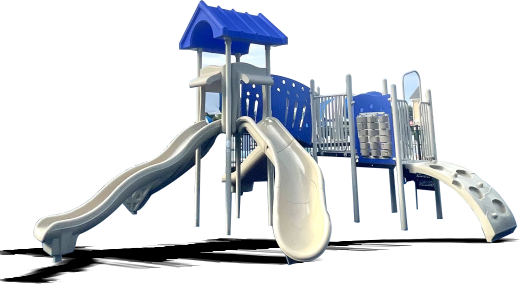
- Subsequent Phases layer on the amenities that transform a simple park into a true community destination. This includes integrating expansive fabric shade structures to combat the intense Southern summer heat, adding inclusive musical play elements, or installing weather-resistant site furnishings like commercial benches and picnic tables.
Phased development allows a board to show immediate progress to residents while maintaining a healthy cash reserve for the future.
Investing in the Total Cost of Ownership
True budget alignment requires looking past the upfront sticker price of recreational equipment and analyzing its lifetime operational cost. Choosing cheaper, residential-grade equipment frequently results in a never-ending cycle of paint touch-ups, hardware failures, and early replacements. It drains your operational funds year after year.
Instead, high-impact planning favors commercial-grade, low-maintenance materials that yield massive community engagement with minimal upkeep. Think of assets like outdoor fitness equipment that engages an under-served adult demographic, or upgrading high-traffic zones to poured-in-place rubber or premium synthetic turf. While these selections require a higher initial capital outlay, they drastically lower annual maintenance hours and eliminate the recurring costs of watering, mowing, or chemical treatments—effectively paying for themselves over their lifespan.
Streamlining Execution with a Single Turnkey Partner
Managing a modern recreation project gets incredibly complex when you are forced to juggle separate contracts for site designers, equipment manufacturers, grading crews, and surfacing installers. A single miscommunication regarding utility lines or grading specs can cause massive delays and completely bust a newly minted budget.
Partnering with Carolina Recreation & Design simplifies the entire fiscal year strategy. Because we handle everything—from initial site consultation and permitting, equipment delivery, surfacing, and final safety inspections—we can actively help you value-engineer your project to fit your specific budget constraints. Let’s make this fiscal year count. Call us at 704-610-1749.