Things at Playgrounds: A Complete Guide for Parents, Educators, and Communities
Playing outside allows kids to develop more advanced motor skills than children who spend most of their time indoors. Experts in child development often note that the specific things at playgrounds—like climbers and swings—do much more than just entertain. They help build the physical and social foundations kids need to grow and thrive.
Whether you are a school administrator, childcare provider, or parent, understanding modern playground features is the first step. This guide covers the essential equipment and amenities that make a play space safe, exciting, and beneficial for every child in your community.
What Are the Common Things Found at Playgrounds?
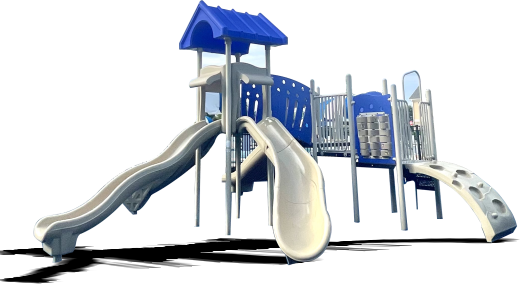
The common things at playgrounds include a variety of outdoor play equipment designed for physical activity, social interaction, and sensory exploration. These features typically range from classic structures like swings, slides, and monkey bars to modern inclusive playground equipment and sensory panels.
A well-rounded playground also incorporates playground amenities such as benches, shade structures, and safety surfacing to ensure a comfortable and secure environment for all users.
Playground Safety Considerations by Age Group
A professional playground layout has different zones for different ages. This keeps kids safe and ensures they have the right level of challenge without being overwhelmed.
Toddlers (Ages 1–3)
For tiny explorers, toddler playground equipment must be low to the ground. These areas focus on basic movement and sensory touch.
- Low Slides: Short slides with easy-to-grip steps.
- Spring Riders: Small bouncy seats shaped like animals or cars.
- Bucket Swings: Swings that fully support a toddler’s back and legs.
Preschool (Ages 3–5)
Kids this age are getting better at balancing. They like to play pretend and move their bodies more confidently.
- Climbing Nets: Small, flexible nets to practice climbing.
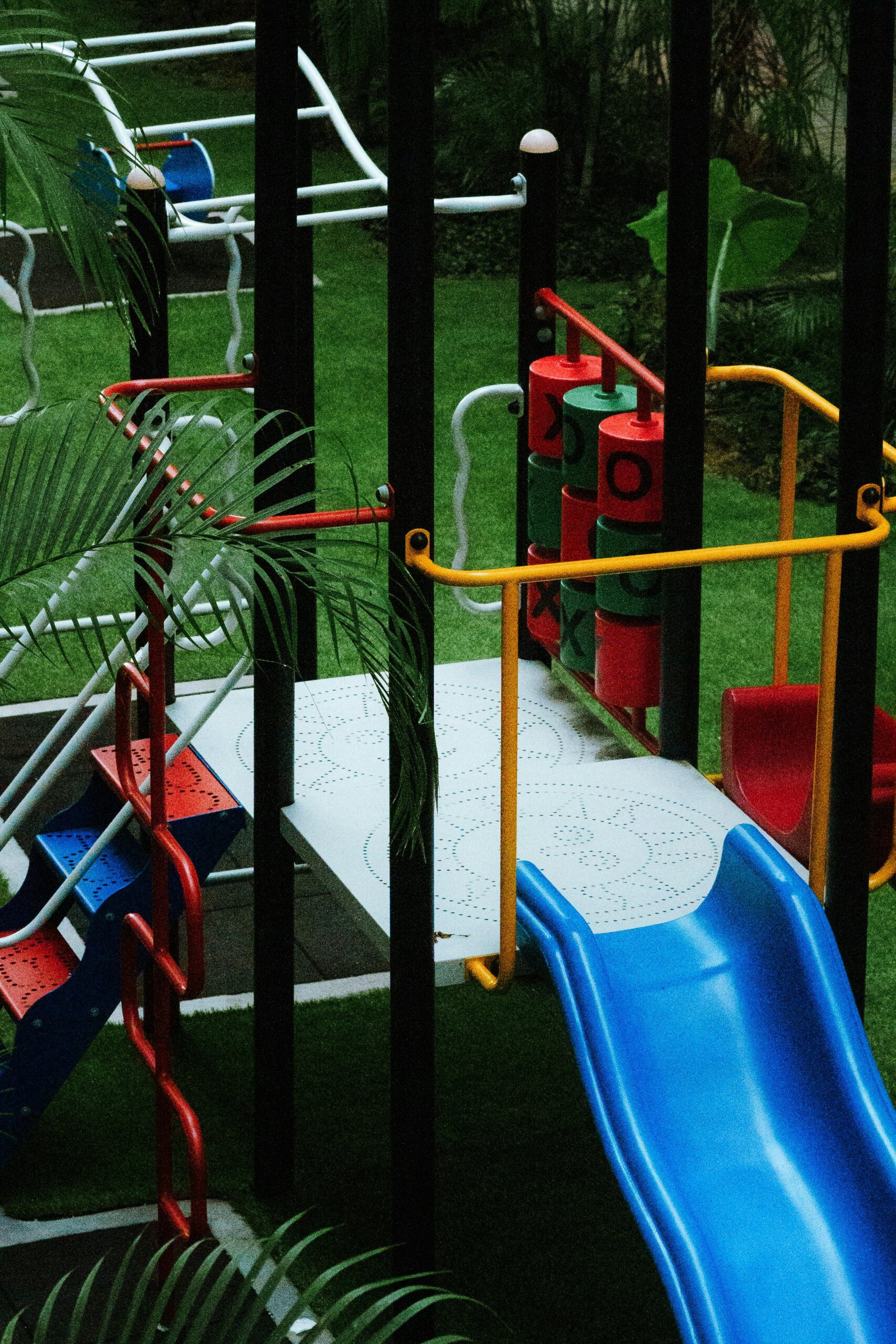
- Activity Panels: Walls with gears, mirrors, or steering wheels.
- Sandboxes: Perfect for building and tactile learning.
School-Age Children (5–12)
Older kids crave adventure and physical mastery. For these groups, park playground equipment focuses on strength and coordination.
- Monkey Bars: Classic school playground equipment for building upper body strength.
- Tall Slides: Longer, faster slides that provide a thrill.
- Zip Lines: A popular modern feature for older children to test their speed and balance.
Essential Categories of Playground Equipment
A great park serves the whole community. It should be easy for everyone to use, regardless of their physical ability.
Inclusive and Accessible Design
An accessible playground design means every child can play. By using inclusive playground equipment, you create a space where children with wheelchairs or sensory processing needs feel welcome and engaged.
Safety and Infrastructure
The ground under the equipment is your most important safety tool. Using high-quality playground surfacing—like poured rubber or turf—helps prevent injuries from falls. To keep the area usable in summer, many planners add playground shade structures to block hot UV rays.
Site Amenities
A playground needs more than just toys to be successful. Professionals look for site furnishings and amenities to make the park comfortable for everyone. This includes benches for resting, trash cans to keep the area clean, and bike racks for visitors.
Frequently Asked Questions About Things at Playgrounds
What is the most popular piece of playground equipment?
Swings and slides remain the all-time favorites. However, many new parks are now adding large climbing towers and spinning seats to attract older kids.
How do I know if playground equipment is safe?
Safe equipment follows strict rules set by groups like the CPSC (Consumer Product Safety Commission). You should also check that the ground has thick rubber or engineered wood chips to cushion any falls.
What is the difference between accessible and inclusive playgrounds?
“Accessible” means a child in a wheelchair can physically get into the park. “Inclusive” means the equipment is specially designed so children of all abilities can play together at the same time.
How much space is needed for a community playground? Most school playground equipment needs a “safety zone” of at least 6 feet in every direction. This prevents children from accidentally running into someone who is swinging or sliding.